Options / Contract research
Exercise deadlines and expiry instructions are account records
Keep option-holder decisions, short-leg assignment and broker cutoffs distinct; being near a strike does not determine the final position.
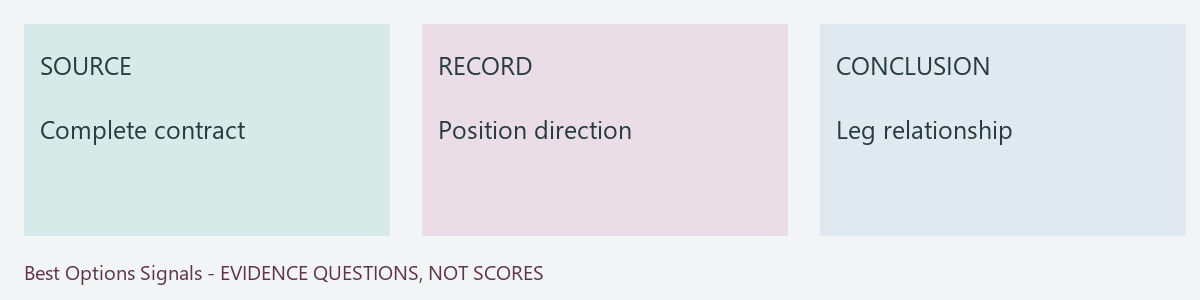
Exercise is not the same as assignment
The holder exercises a right; a writer receives an obligation through assignment. Identify which side the account holds before interpreting an instruction. A short contract cannot be treated as though the writer independently chooses the holder's exercise decision. Product-specific style and settlement still govern the position.
Use the OIC assignment FAQ for mechanism context, then obtain the selected broker's actual procedures. This publication does not provide a universal exercise cutoff, probability of assignment or instruction for a particular account. A familiar rule of thumb cannot settle a disputed broker posting.
Four records rather than one chart
Retain the applicable contract, broker policy, actual submitted instruction and account response. Their timestamps and statuses belong beside the price observation. An instruction marked sent may still be rejected or late; no receipt means the operational result is unresolved.
An in-the-money closing print does not alone tell the reviewer what happened to every leg. Later decisions, exceptions or restrictions may matter. Keep actual exercise and assignment postings rather than inventing an automatic symmetrical close.
A spread can leave a new position
One leg exercising or being assigned can leave shares or another obligation even when the option alert is described as finished. Track the post-event inventory and cash. The original premium return does not include the later share liquidation unless the result convention explicitly reconciles it.
The difference between an ideal common settlement and broker processing is why a simplified expiry bound is not a complete account risk certificate. Keep the declared model assumptions visible and do not use a stop level to claim guaranteed control over an exercise event.
Freeze the endpoint policy
A provider should define whether a reported outcome ends at an option closing fill, cash settlement, exercise posting or liquidation of residual shares. Those are different populations and cash flows. A changed endpoint needs an amendment, not a silent historical rewrite.
If the broker cutoff or contrary instruction record is unavailable, withhold the account reconstruction. You may still explain the mechanism and identify the required evidence. Missing operational records do not justify a confident claim of either zero risk or wrongdoing.
Completed fictional case
Fictional broker policy sets a 16:20 local cutoff. A reader submits a contrary instruction at 16:25 and has no acceptance record. The option chart at 16:00 cannot prove that the instruction was valid. The review result is unresolved exercise handling, not a fabricated successful opt-out. A later account statement records 100 shares: that posting becomes a new inventory item requiring cash and exit reconciliation.
| Object | Declared finding | Evidence boundary |
|---|---|---|
| Policy cutoff | 16:20 local | Fictional policy |
| Submitted instruction | 16:25; acceptance missing | Not assumed accepted |
| Later posting | 100 shares | Residual state, not flat |
Originating references
Public sources inspected 12-13 October 2026. Worked cases are original fiction. No paid tool, account, option-chain feed, selected copying leader or broker route was operated in this review.